Blog / Guides
A Tour of America's Regional BBQ Styles
May 30, 2025 · by Marcus Reilly
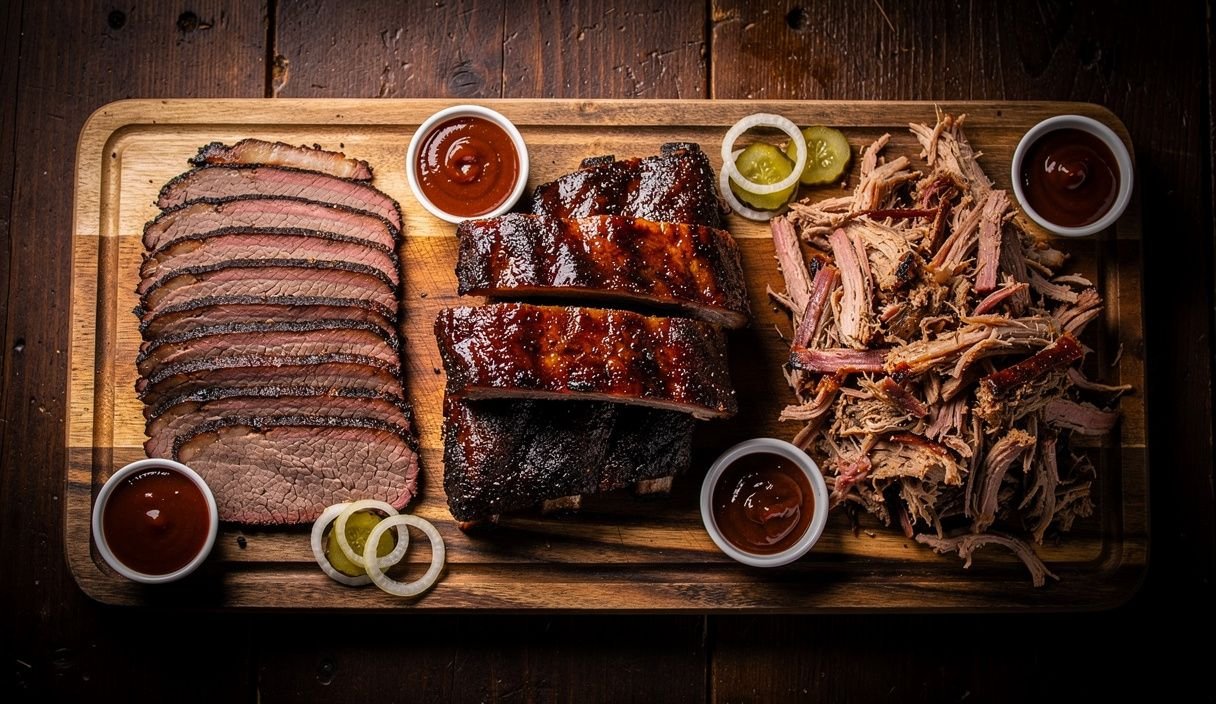
Barbecue in the United States is not one cuisine, it is several regional traditions that developed independently based on local livestock, available wood, and cultural history, and understanding the differences will change how you read a menu and how you cook at home.
Central Texas barbecue centers on beef, particularly brisket, seasoned simply with salt and coarse black pepper and smoked low and slow over post oak. The style traces back to German and Czech immigrant butcher shops in the Texas Hill Country, and it deliberately avoids heavy sauce, letting the meat, smoke, and bark speak for themselves. Sauce, if offered at all, usually sits on the side rather than being brushed on during the cook.
Kansas City barbecue is the most maximalist of the major styles, smoking a wide variety of meats including burnt ends, ribs, and chicken, and finishing them with a thick, sweet, tomato-and-molasses-based sauce that caramelizes into a sticky glaze. It is the style most people picture when they imagine classic American barbecue, largely because Kansas City's sauce became the commercial template for bottled barbecue sauce nationwide.
Memphis barbecue is best known for ribs, prepared either wet, meaning basted with sauce during and after cooking, or dry, meaning coated in a spice rub with sauce served on the side or skipped entirely. Memphis is also historically significant for pulled pork sandwiches, often topped with coleslaw directly on the sandwich rather than served as a side.
Eastern and Western North Carolina represent two competing philosophies within the same state. Eastern Carolina barbecue chops the whole hog and dresses it with a thin vinegar and pepper sauce with no tomato at all, while Western, or Lexington-style, barbecue focuses on the pork shoulder and uses a vinegar sauce cut with a small amount of ketchup, producing a noticeably different color and sweetness.
Alabama barbecue stands apart mainly through its white sauce, a mayonnaise-based mixture with vinegar and black pepper that is brushed onto smoked chicken rather than a tomato or vinegar sauce. It originated in northern Alabama and remains fairly regional, though it has slowly spread as a novelty condiment elsewhere.
None of these styles is more authentically "barbecue" than the others, they simply reflect different local histories of livestock, immigration, and available ingredients. Trying a few different regional approaches at home, rather than assuming one style is the default, is one of the most enjoyable ways to expand your own technique.