Blog / Guides
Safe Meat Temperatures Explained: What the Numbers Actually Mean
March 8, 2025 · by Jasmine Okafor
Every grilling season brings the same question into our inbox: why does chicken need to hit 165 degrees while a rare steak is safe at 125? The short answer is that food safety temperatures are not one-size-fits-all, they are calculated based on the specific bacteria risks of each type of meat and how the meat is typically prepared.
Whole cuts of beef, pork, veal, and lamb, meaning steaks, chops, and roasts that have not been ground or mechanically tenderized, only carry bacteria on their exterior surface. Searing or grilling the outside kills that surface bacteria even if the interior stays pink, which is why the USDA allows these cuts to be cooked to a minimum of 145 degrees Fahrenheit with a three minute rest, and why a properly seared rare steak is genuinely safe to eat.
Ground meats are a different story because grinding mixes any surface bacteria throughout the entire mass of meat, not just the exterior. That is why ground beef, pork, and lamb need to reach 160 degrees Fahrenheit all the way through, with no exceptions for a pink center, regardless of how the meat looks or how it was sourced.
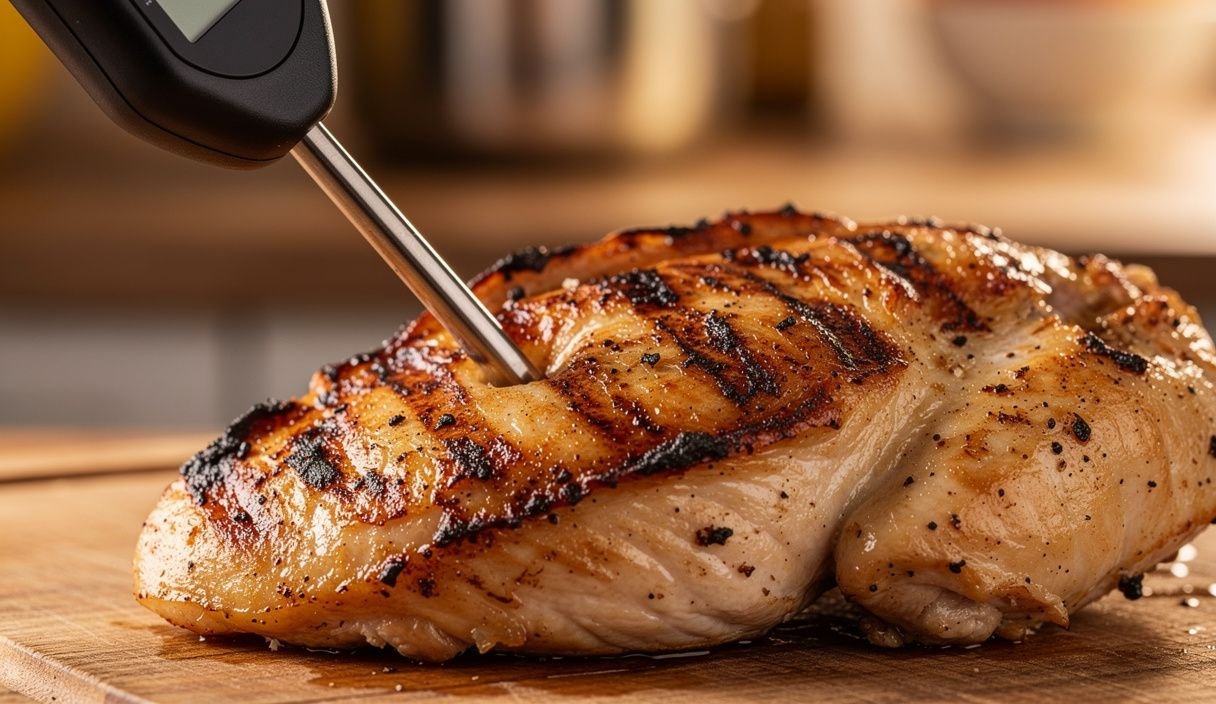
Poultry sits at the top of the chart at 165 degrees Fahrenheit because chicken and turkey carry a higher baseline risk of salmonella and campylobacter, and because poultry meat structure makes it harder to visually judge doneness compared to red meat. This applies to whole birds, parts, and ground poultry alike, with no lower safe threshold the way there is for beef.
Fish is often overlooked in these conversations, but the same logic applies. Most finfish is safe at 145 degrees Fahrenheit, similar to whole cuts of red meat, since the relevant risks are different from those in poultry and the flesh itself is naturally more delicate.
The practical takeaway is to stop guessing by color, since factors like myoglobin content, cooking method, and even the age of the animal can all affect how pink meat looks at a given internal temperature. A reliable instant-read or leave-in probe thermometer is the only tool that actually confirms safety, and it costs a fraction of what a single case of foodborne illness costs in lost time and misery. Buy one, calibrate it in ice water occasionally to make sure it reads 32 degrees Fahrenheit accurately, and use it on every single cook, not just the ones that seem risky.