Blog / Techniques
Seasonal Grilling Tips: What Changes as the Weather Shifts
September 15, 2025 · by Marcus Reilly
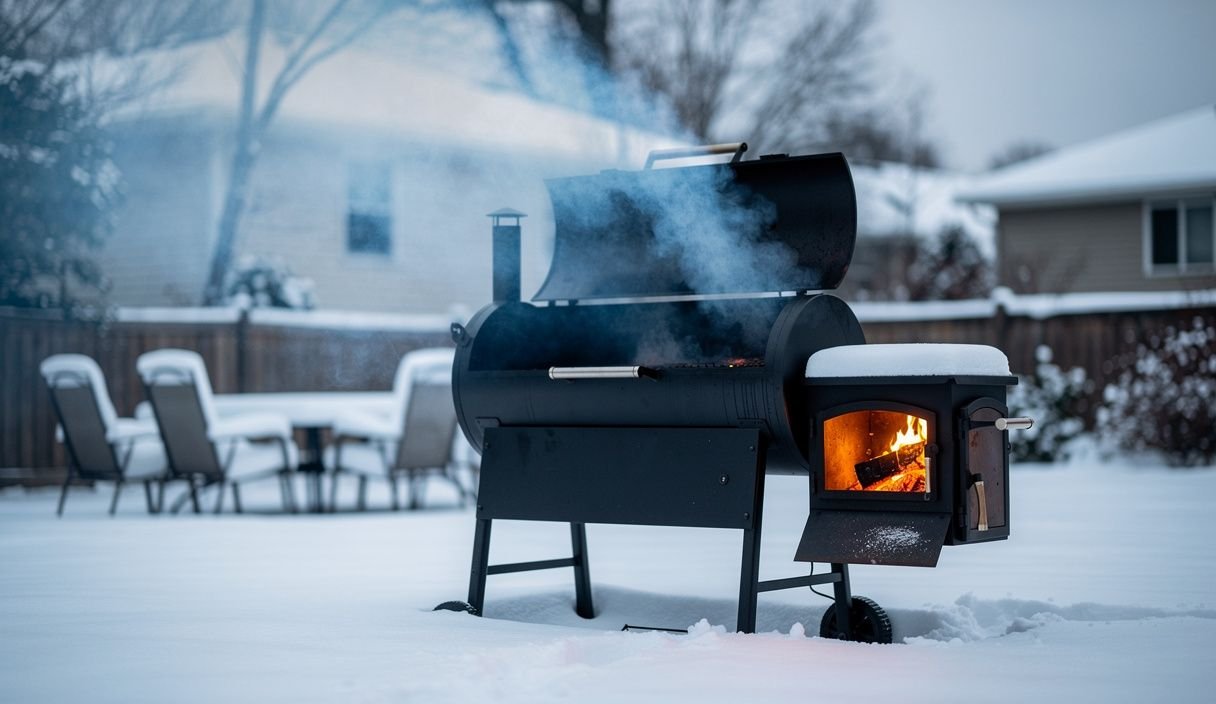
Most grilling advice assumes it is a warm, calm summer evening, but weather changes the physics of your cook far more than most people realize, and adjusting for the season keeps your results consistent year round.
In cold weather, your grill or smoker has to work harder just to maintain temperature, since more heat is lost to the surrounding cold air through the metal body of the unit. Expect to burn more fuel than you would in summer for the same cook, and budget extra time, since a smoker that holds 250 degrees easily in July might struggle to stay above 225 in freezing temperatures without extra insulation or fuel.
Wind is a bigger factor than most people account for, in any season. Strong, gusty wind can push flames unevenly across a grill grate, create hot and cold spots, and cause dramatic temperature swings on a smoker by disrupting airflow through vents. Position your grill with some kind of windbreak, whether that is a fence, a wall, or even a temporary shield, especially in exposed backyards during fall and winter storms.
Humidity affects smoke behavior in ways that are easy to miss. Very dry summer air can cause a fire to burn hotter and faster than expected, while damp, humid conditions can make a fire sluggish and harder to maintain at a steady temperature, particularly with charcoal, which absorbs ambient moisture more readily than people expect.
Daylight matters for planning, not just cooking. A long summer cook started at noon still finishes in daylight, but the same cook started at noon in December might finish well after dark, which matters both for visibility while monitoring your fire and for guests arriving to a yard that is difficult to see or navigate safely.
Rain calls for genuine caution around electrical components on pellet grills and electric smokers, since controllers and igniters are not designed to get soaked. A simple grill umbrella or cooking under a covered patio protects both your equipment and your ability to keep cooking through unexpected weather.
The core lesson across every season is the same: temperature control is a battle against your environment, not just your fuel source. Understanding how wind, cold, humidity, and daylight each push back against your target temperature lets you adjust your approach before a cook rather than reacting mid-way through one.