Blog / Gear
Knife Care for Grillers: Keeping Your Blades Ready for Brisket Season
June 18, 2025 · by Dale Thompson
A lot of attention in barbecue goes toward smokers, thermometers, and rubs, but the humble slicing knife rarely gets the same respect, even though a dull blade can undo hours of careful cooking in the final step of slicing your brisket or ribs.
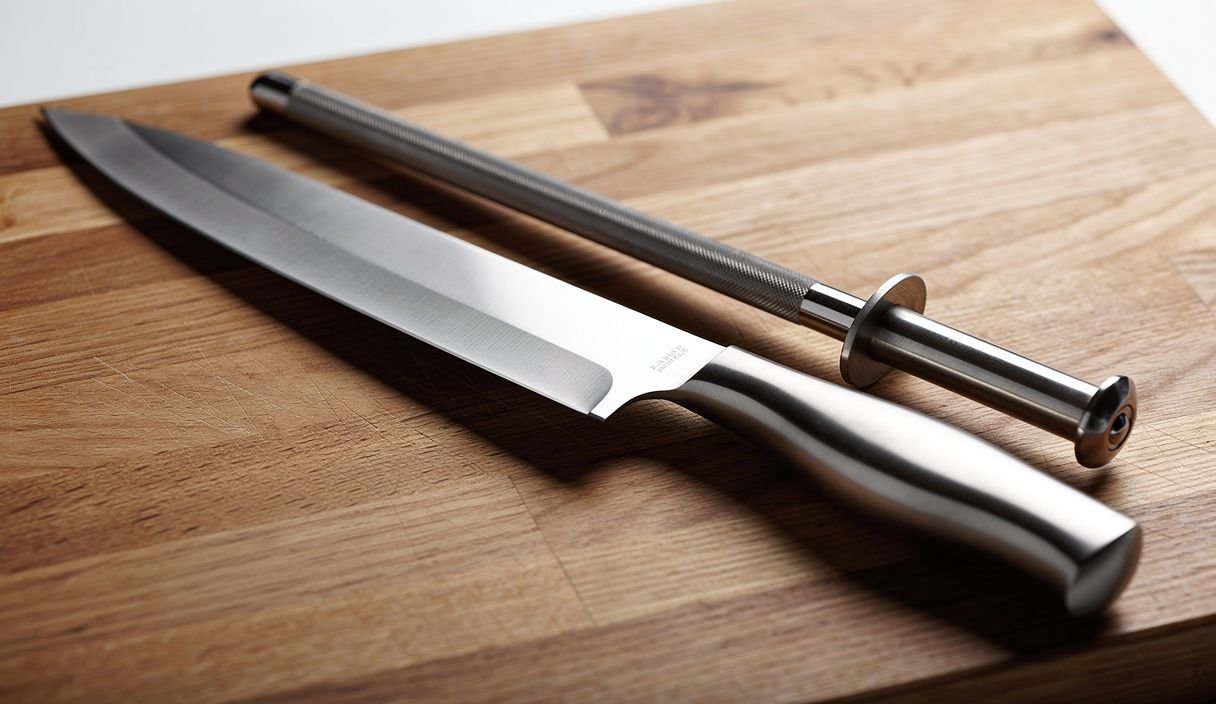
The first distinction to understand is between honing and sharpening. A honing steel does not remove metal, it simply realigns the microscopic edge of the blade that bends slightly with normal use. Running your knife along a honing steel before every single use, at a consistent angle of roughly fifteen to twenty degrees, keeps the edge straight and should become as automatic as washing your hands before cooking.
Sharpening, by contrast, actually grinds away a small amount of metal to create a new edge, and it is only needed every few months for a knife used regularly, or less often for one used occasionally. Whetstones give you the most control and the best edge, but they take practice, so a quality pull-through or electric sharpener is a perfectly reasonable choice for most home cooks who want consistent results without the learning curve.
Storage matters more than most people realize. Tossing knives loose into a drawer dulls the edge every time it knocks against another metal object, and it is also a genuine safety hazard when reaching into a drawer full of loose blades. A magnetic strip, a blade guard, or a proper knife block all protect the edge and your fingers far better than a junk drawer.
Always hand wash and dry your knives immediately after use rather than running them through a dishwasher. The combination of harsh detergent, high heat, and knocking against other utensils in a dishwasher rack degrades both the edge and, on wood-handled knives, the handle itself.
For barbecue specifically, a long slicing knife with a thin, flexible blade is worth owning separately from your general chef's knife. It is purpose-built for cutting thin, even slices against the grain of a brisket flat without tearing the meat or crushing the bark, something a shorter, thicker chef's knife struggles to do cleanly.
A cheap, dull knife dragged through a beautifully cooked brisket will tear the meat, crush the bark, and produce ragged slices no matter how well the cook itself went. Spending five minutes a week on basic knife care protects the final, most visible step of every barbecue meal you serve.