Blog / Guides
The Wood Chip Flavor Guide: Matching Smoke to Meat
February 3, 2025 · by Priya Anand
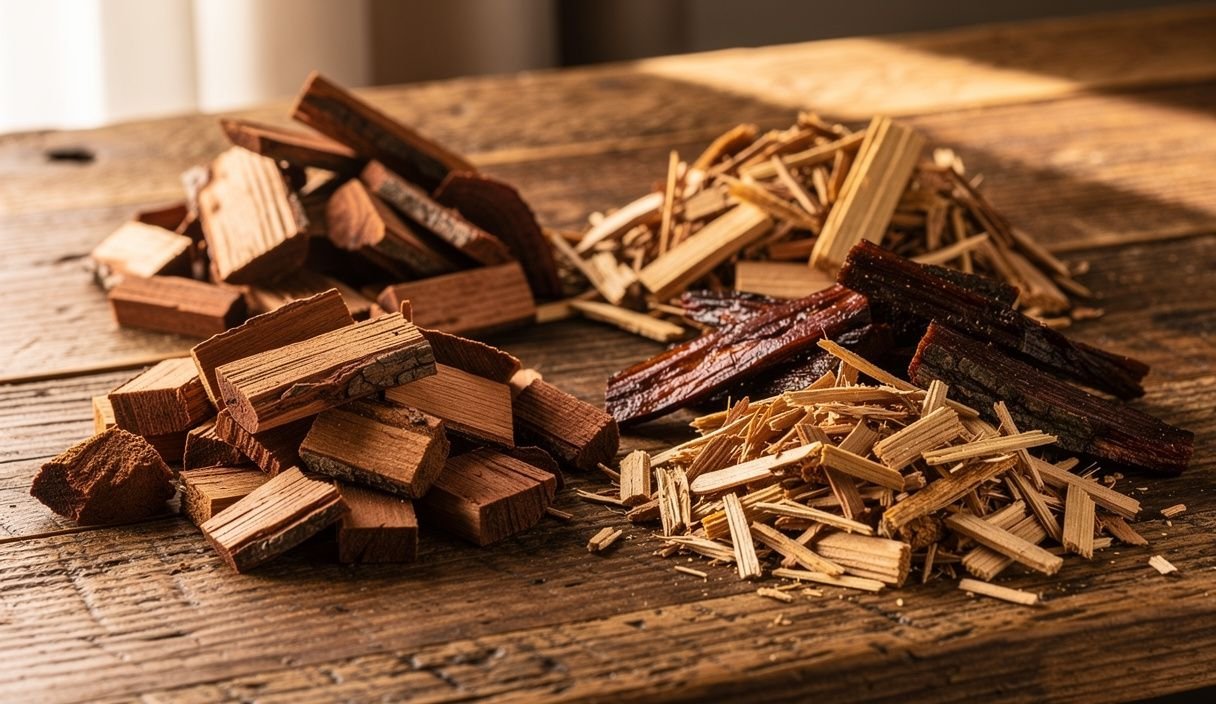
New grillers often reach for whatever wood chips are cheapest at the store, then wonder why their chicken tastes like an ashtray. Wood choice matters as much as your rub, and matching the right species to the right protein is one of the fastest upgrades you can make to your barbecue.
Hickory is the classic all-purpose choice, and for good reason. It produces a strong, bacon-like smokiness that stands up to pork shoulder and ribs without overwhelming them. It is a safe default, but using it on everything is like seasoning every dish with the same single spice.
Oak sits a notch milder than hickory and burns clean for long cooks, which is why it is the backbone of Texas brisket. Its flavor is assertive but not sharp, and it plays well as a base wood that you can blend with something fruitier for extra complexity.
Fruit woods like apple, cherry, and peach bring a mild sweetness and, in cherry's case, a beautiful reddish tint to the bark. These are excellent on poultry and pork where you want smoke as a supporting note rather than the star of the dish. Cherry in particular is popular for baby back ribs precisely because it adds color without adding bitterness.
Mesquite is the wood to use with restraint. It burns hot and fast and delivers an intensely earthy, almost pungent smoke that can turn acrid if used for a long cook. It shines on quick-cooking cuts like skirt steak or fajita meat, where a short blast of smoke is exactly what you want, but it is a poor choice for an eight-hour brisket.
A good rule of thumb is to think in terms of cook time. Long, slow cooks like brisket and pork shoulder favor milder, longer-burning woods like oak or a fruit wood blend, since the smoke has hours to build up and can turn bitter if too strong. Short, hot cooks like burgers, steaks, or fajitas can handle a punchier wood like mesquite or hickory because the exposure time is brief.
Do not be afraid to blend. Many pitmasters run a base of oak for heat stability and add a handful of cherry or apple chips toward the end of a cook for a final layer of sweetness and color. Treat wood the way you would treat a spice rack, choosing combinations rather than defaulting to a single bag every time.